A Pilates studio's app, built from its own Dev board
A one-page site for a clinical Pilates studio grew into the app the studio runs on: a client area, a staff area, a Go API, an iPhone build, and Claude working from a Dev board inside the app. A tour of what's there and how it gets built.
Ana Luísa is a physiotherapist who teaches clinical Pilates in Maia. In August 2025 João made her studio a one-page site on Firebase. In April 2026 it got a booking form that emailed the studio. In August 2026 it turned into something bigger: the app the studio runs on, with its own server, a client area, a staff area, and a Dev board that Claude works from.
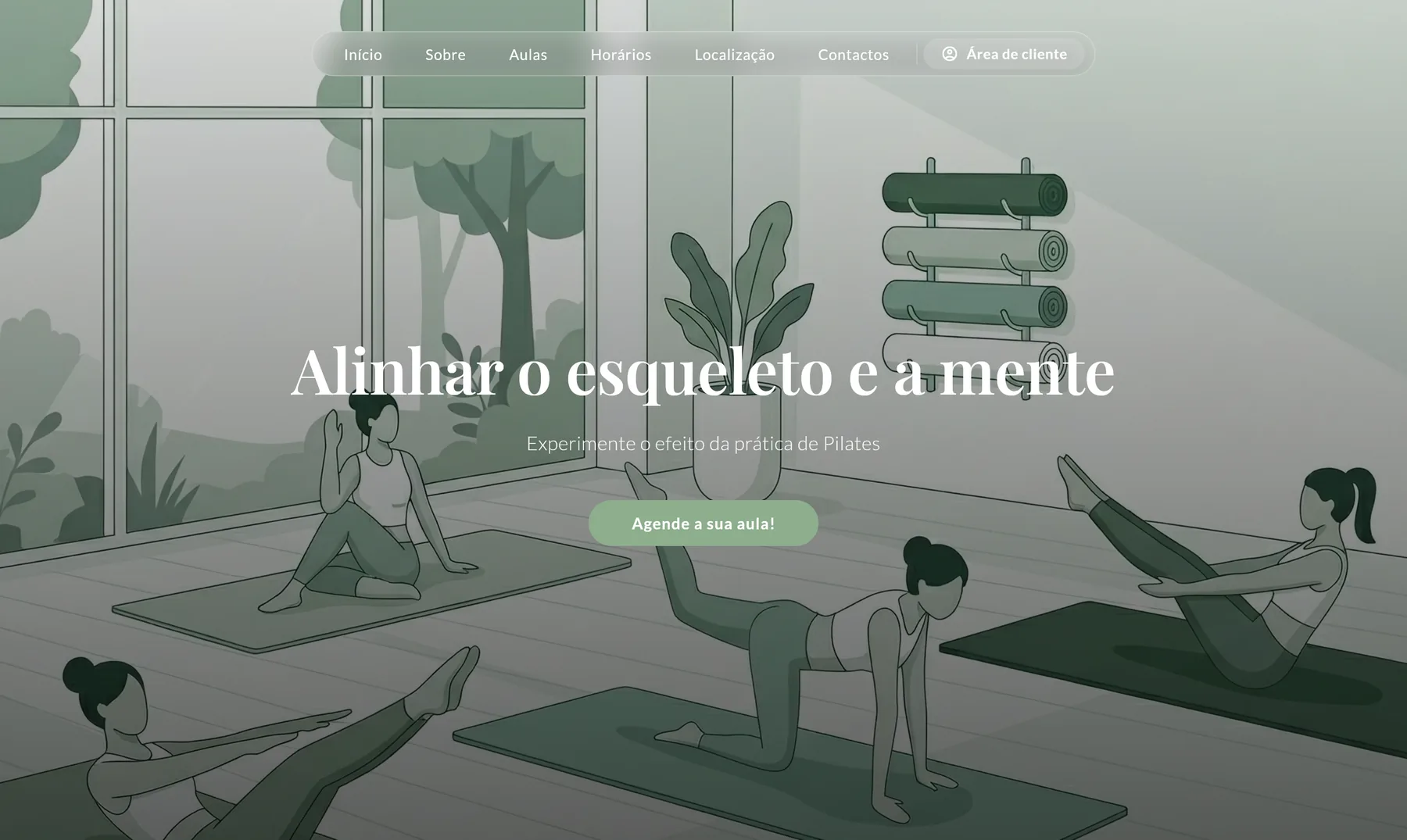
The screenshots of the app below come from a copy run on the Mac and filled with made-up clients. The real one holds health data.
How it fits together
- One Flutter codebase. The public site, the client area and the staff area, for the web and for iPhone. The iPhone app has been in a TestFlight beta since September.
- A Go API on SQLite. One binary on a small Google Cloud VM, rebuilt by an Ansible playbook. It took over from Firestore and Firebase’s email extension; Firebase now only serves the web files. The plan gave the reason: own the stack and be able to move it anywhere.
- Backups at home. Every day an encrypted copy of the database goes to João’s Mac, and the app shows when the last one arrived.
- Staging next to prod. Same code, same server, its own data.
For the clients
The client area is invite only. A client logs in with a six-digit code sent by email, so there’s no password to forget.
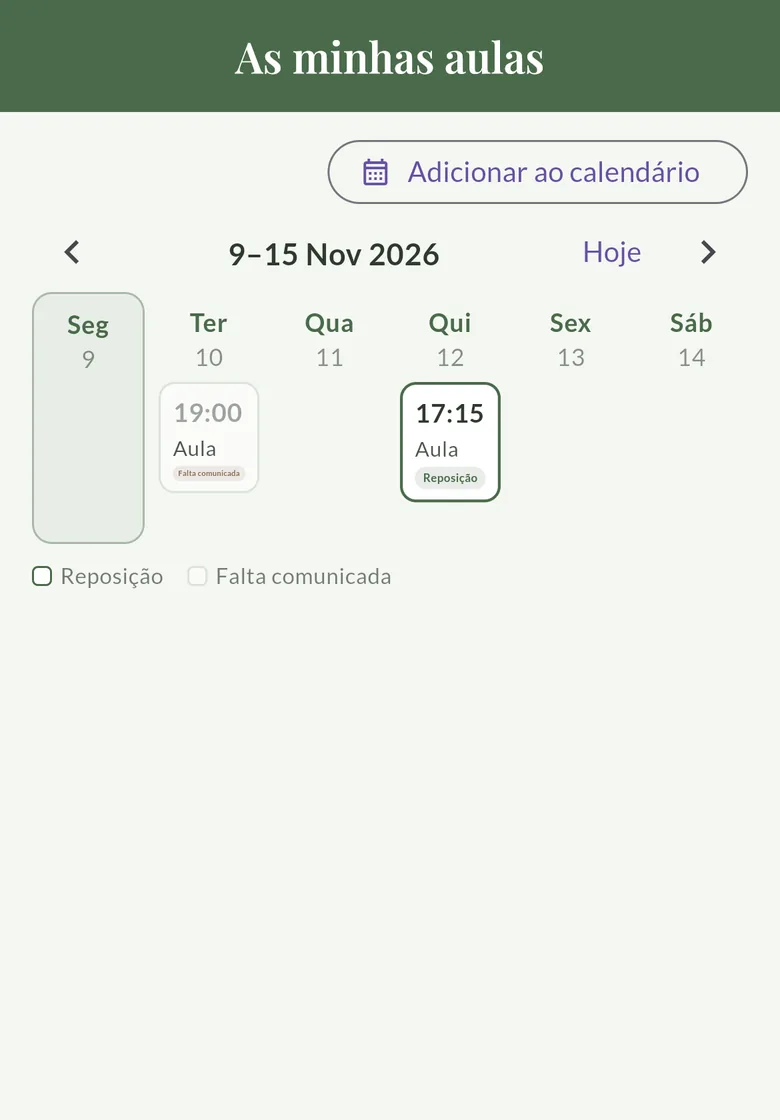
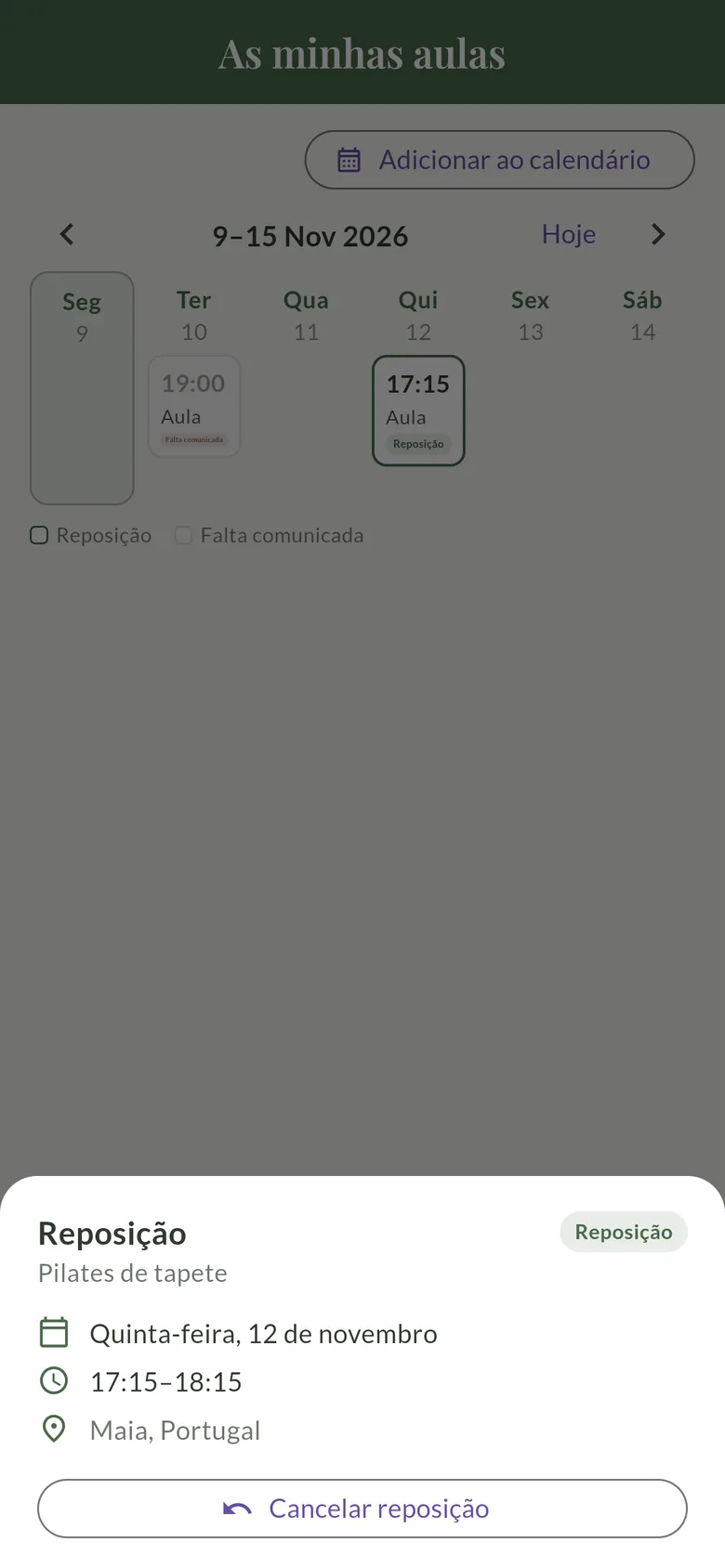
- The week. Their classes on a calendar. «Não posso ir» frees the seat and gives a make-up credit. The make-up goes in a class of the same kind of Pilates that hasn’t started yet.
- Payments. Month by month, and the whole year.
- Their data. They edit their details, add their classes to their own calendar, export everything, or delete the account.
- Offline. Without a connection the app shows the last week it downloaded, marked as such.
- A button to report a bug or suggest something. It goes straight onto the Dev board.
For the studio
The staff area has three roles that combine freely: admin, instructor and physiotherapist. An instructor sees who’s coming only to the sessions she teaches, and no prices.
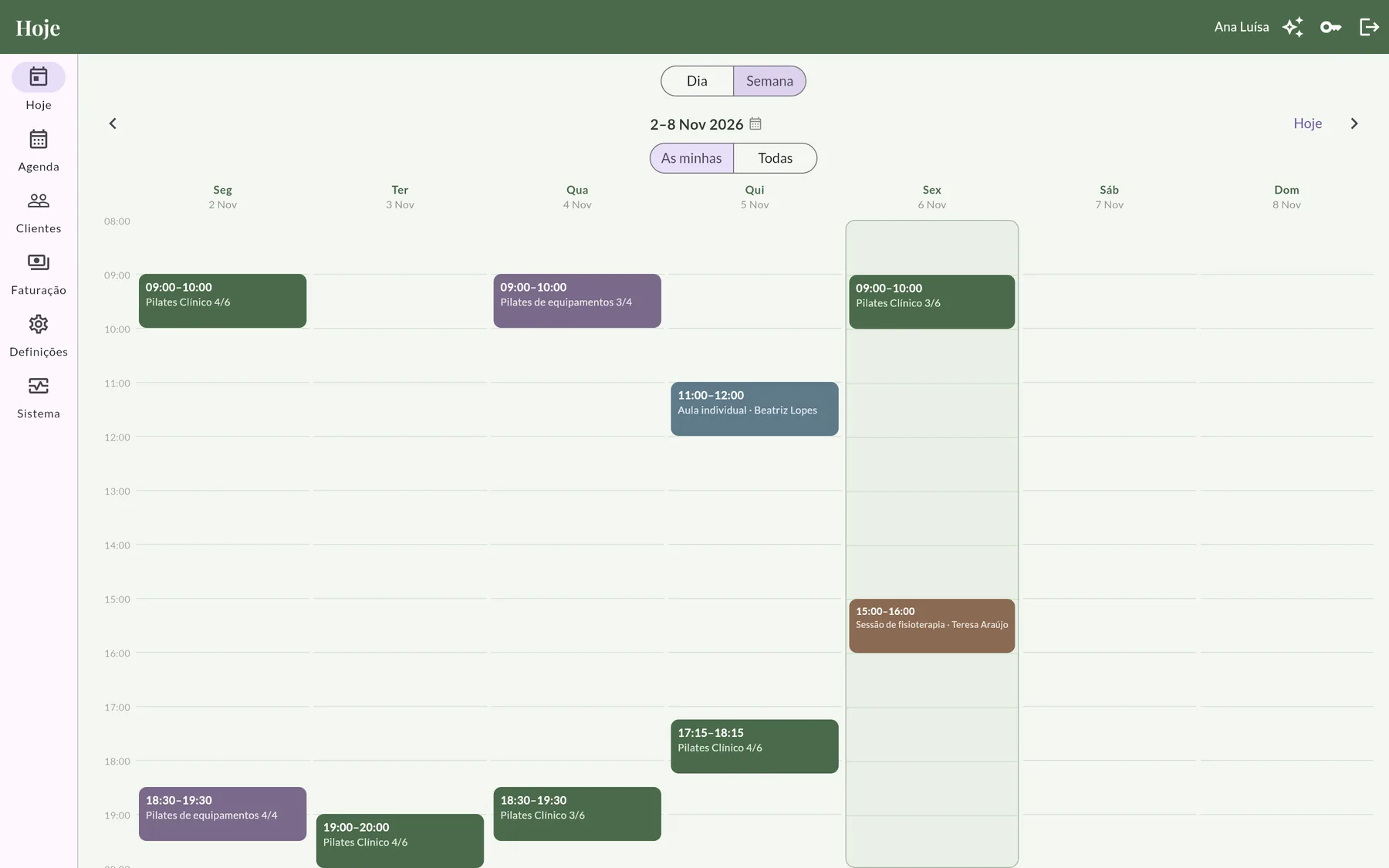
- Hoje. Today’s classes and who’s in them. A tap marks who came. Day or week.
- Agenda. The weekly classes, one-off sessions, closures and holidays, and a year planner with each instructor’s holidays. A session can be cancelled, moved, joined with another class for the day, or handed to a substitute.
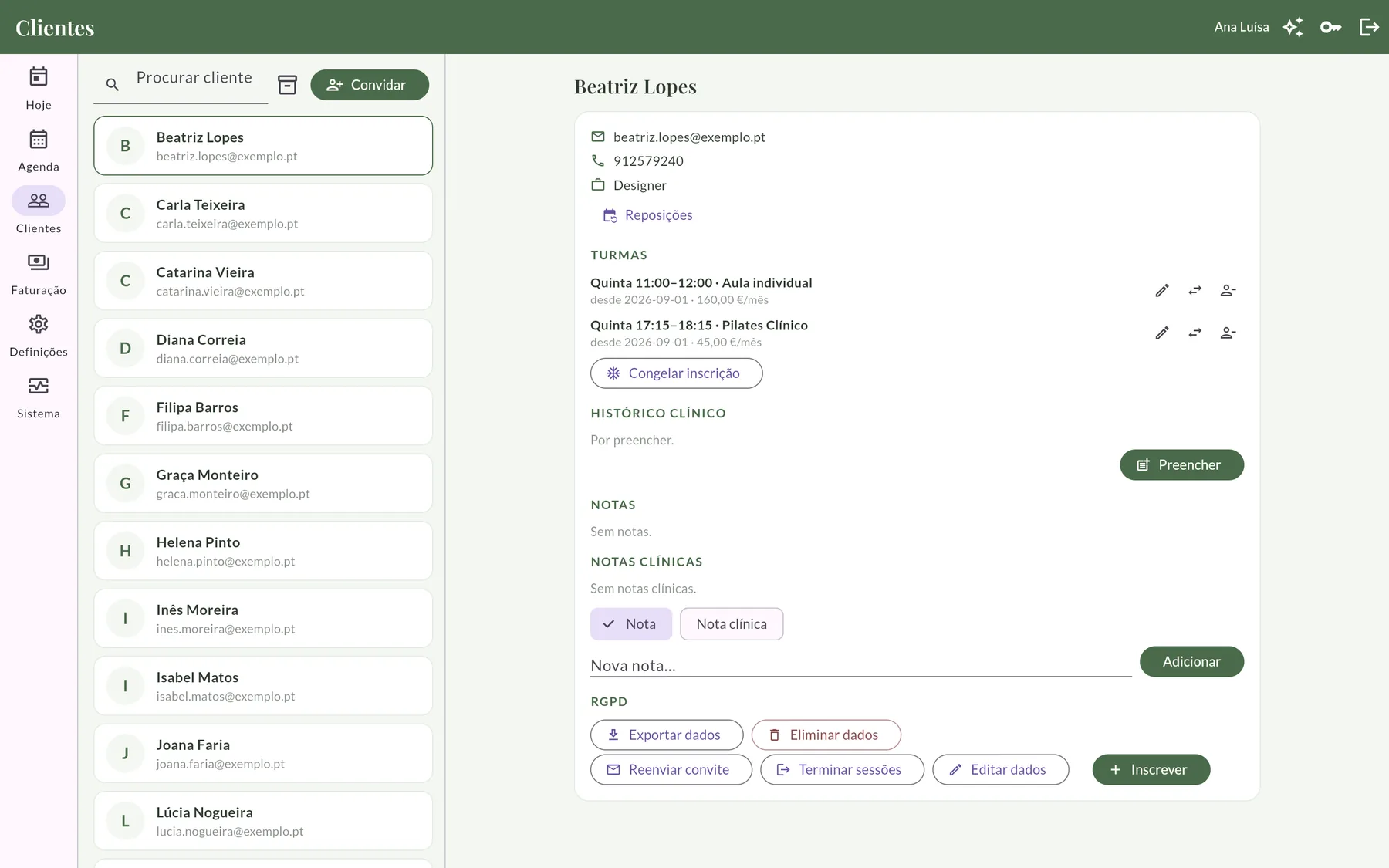
- Clientes. The client’s record: classes, make-ups, notes, and a clinical history that keeps every version. Clinical notes can’t be deleted. Records for physiotherapy patients can have no email at all.
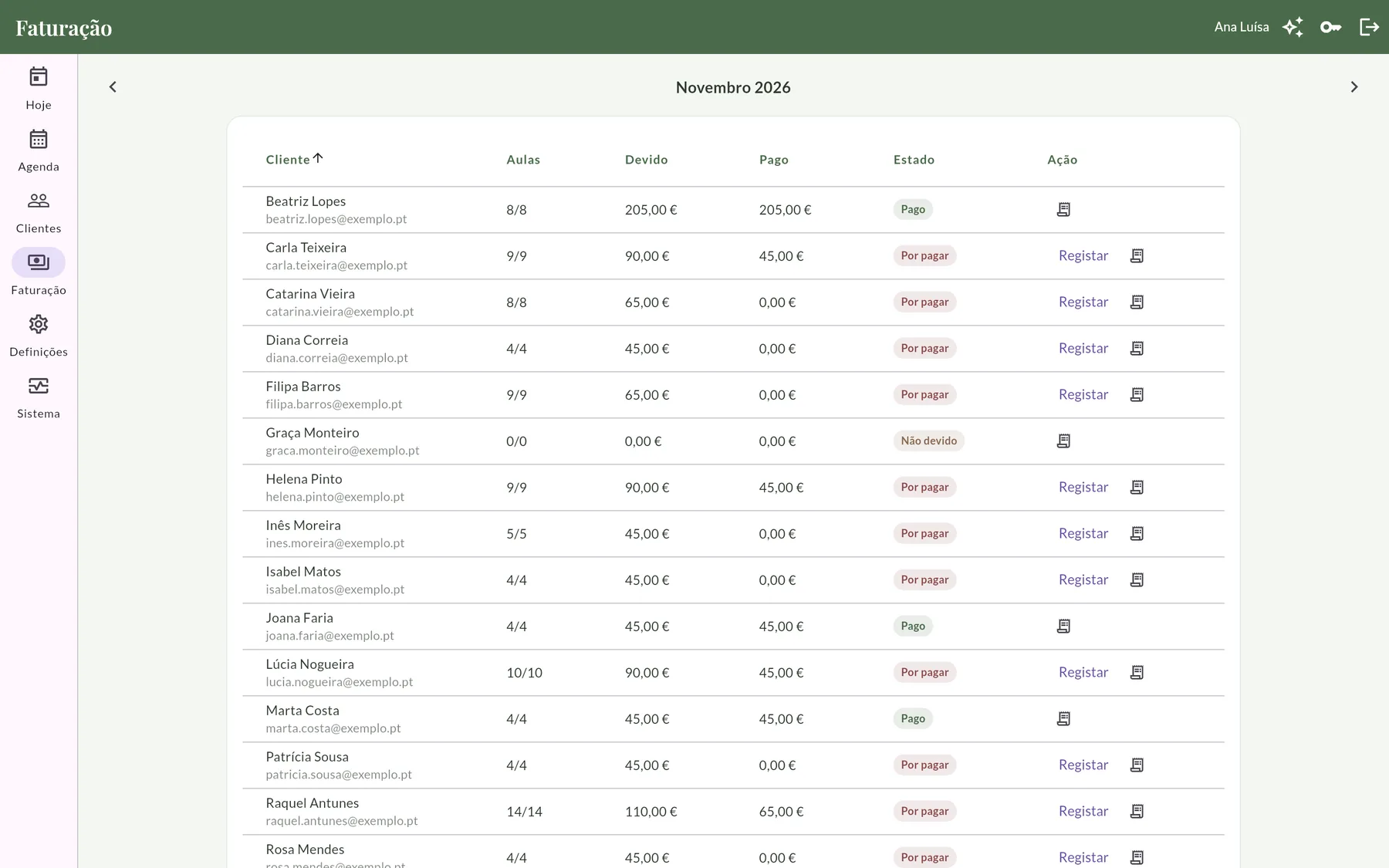
- Faturação and Finanças. Who has paid each month, statements, frozen months, revenue by kind of class, and the instructor’s share.
- Emails to the studio when a client cancels or books a make-up.
- Sistema. Visit counts, the team’s accounts, backup status, and Dev.
The Dev board
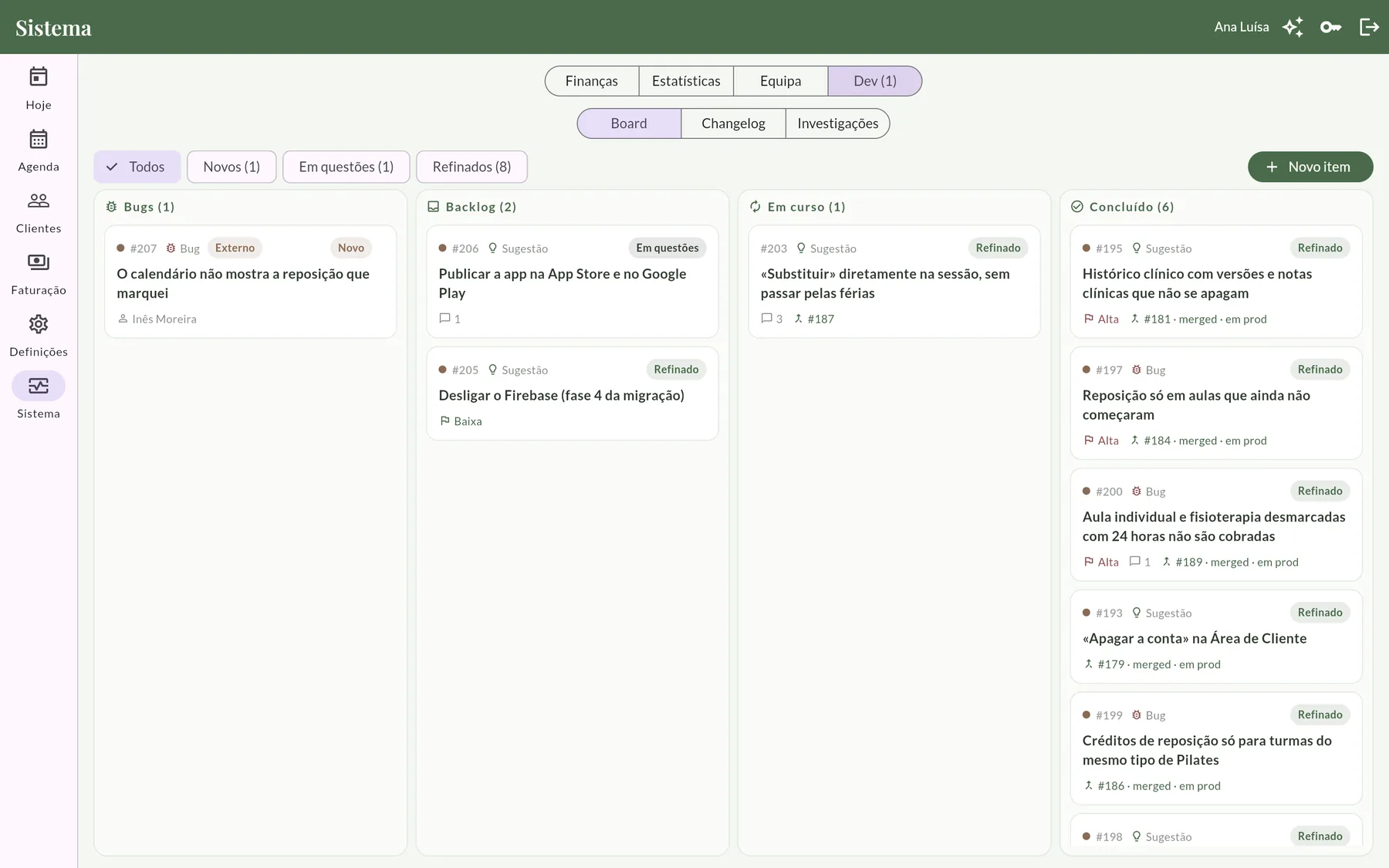
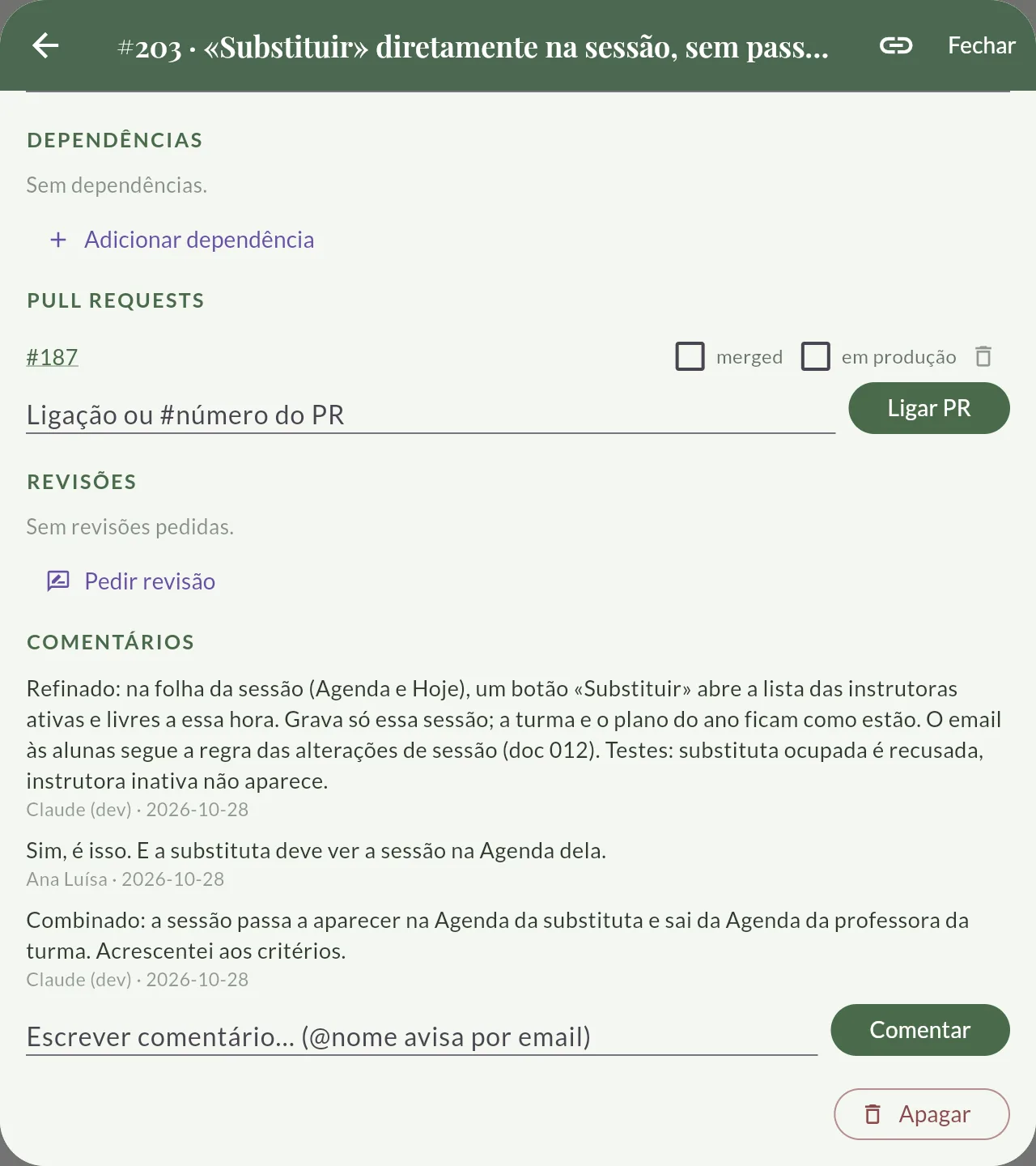
Sistema → Dev is a kanban: Bugs, Backlog, Em curso, Concluído. Each story has a refinement state (Novo, Em questões, Refinado), a thread of questions and answers, dependencies, and links to its pull requests, each marked merged and in production. A changelog lists what shipped. Ana Luísa files requests there herself. The trial class and the emails about absences both started as her stories.
Claude has its own staff account, «Claude (dev)», and goes through the same API as everyone else. Every question it asks and every card it moves is on the record.
Claude inside the app
The listener
On João’s Mac a small daemon watches the board. For each new story, and each new comment from a person, it runs claude -p with a fixed prompt and read-only tools: it can read the code, and it has one command to talk to the board. It reads the code, then asks questions or writes «Refinado: …» with a plan and marks the story ready. Each run is tied to its story. It can read the whole board but write only on that one.
It runs on João’s Claude subscription, so there’s no API key on the server and nothing is paid per call. At first it asked for work every two minutes. The next day it held a request open instead, and the same day a Cloudflare Worker took over the waking up: the server pings it, and it wakes the Mac over a WebSocket in under a tenth of a second. Only a signal and a number pass through it, never text.
The assistant
A chat in the staff area for the two admins, João and Ana Luísa. It answers how things are done in the app, from a manual in Portuguese that the stories keep up to date, and questions about the studio’s data. That gives Ana Luísa her own way to learn the app: she can find out how to do something without having to ask the developer.
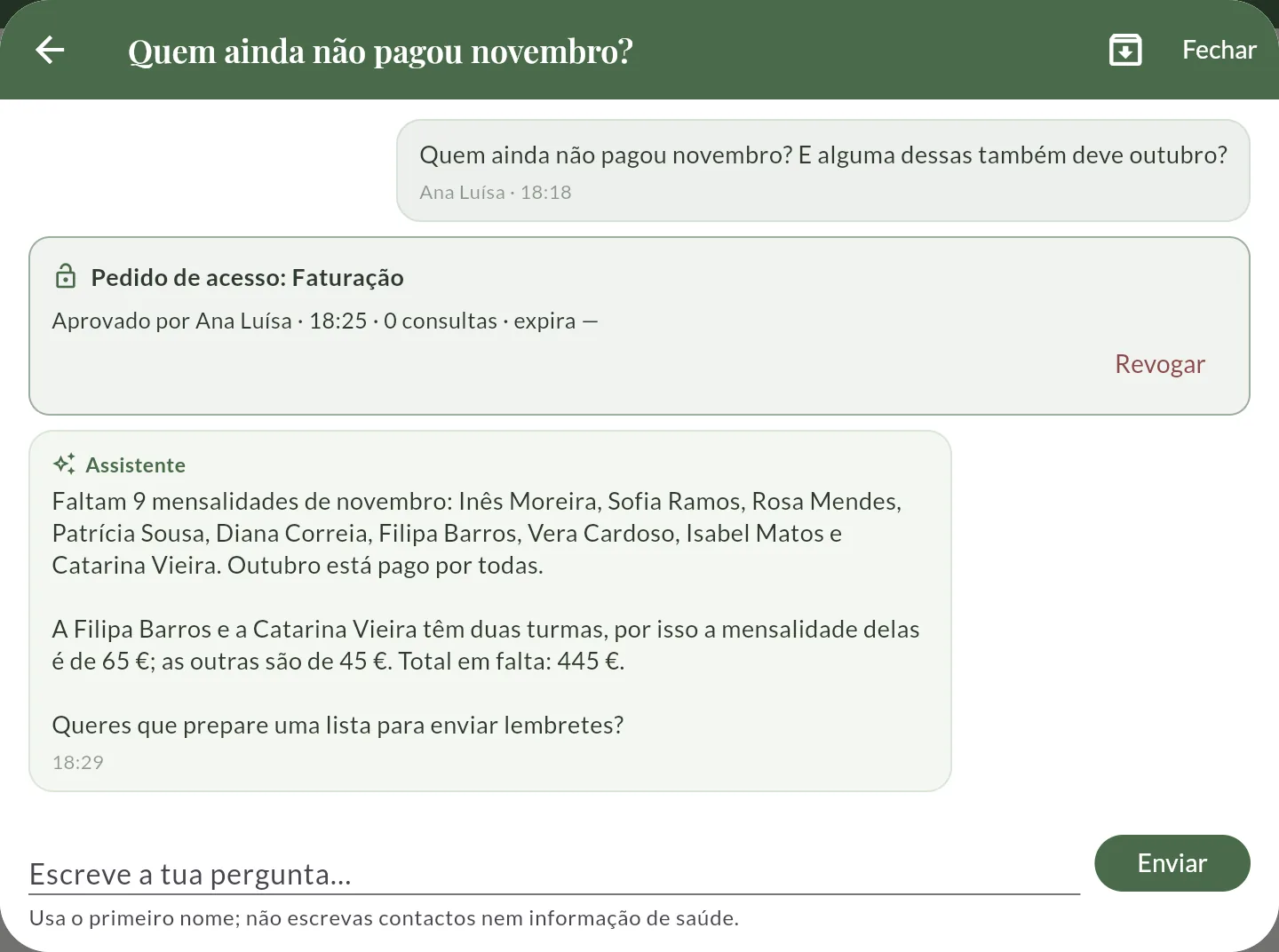
- Little by default. On its own it sees the manual, the code, the schedule without clients, and totals.
- Access on request. For client data it asks for a scope (clients, billing, booking requests), and a person approves it on a card. The grant ends 60 minutes after first use, 24 hours at most. Notes, the clinical history and the messages from the booking form never reach it.
- Changes on approval. It proposes changes as cards with a preview worked out by the server. They run only when a person presses Aprovar, through the same code as the app’s buttons. A change to the app itself becomes a story on the board, five a day at most.
Audits
Twice in October Claude Code went through the code as a team of agents. The first was a security audit: six auditors, one per area of risk, and three verifiers whose job was to disprove each finding, with throwaway Go tests where it helped. It took about 21 minutes and close to two million tokens. The second came from writing the studio’s terms and conditions. Checking the code against them turned up 33 problems, each confirmed by one agent and challenged by another.
The findings land in Sistema → Dev → Investigações, where a person accepts one, and it becomes a bug, or rejects it with a reason. Two that were fixed: the clinical history now keeps its versions, and an instructor’s Agenda no longer shows prices.
The workflow
Big pieces start as a plan. There are 26 of them, numbered, with the decisions taken and the reasons. Open questions stay in the plan until they’re settled. The day-to-day work is stories.
A story counts as done only when it’s in production. Merging needs the gates to pass: go vet and go test for the server, flutter analyze and flutter test for the app. A git hook runs them on any push to main too. Then ./release.sh ships only what changed since the last release: the server to staging and prod, the site to staging, a browser check, then prod and another check, and a new TestFlight build. Last, the story moves to Concluído with a comment on what changed and how it was checked. A skill in the repository spells this out for Claude, and says no step is optional.
So far that’s about 530 commits, 190 pull requests and 200 stories. The app is about 34,000 lines of Dart, the server about 29,000 lines of Go, and the tests about 45,000 lines more.
Where it stands
Live at ftanafreire.com. Still to come: switching Firebase off for good, and the App Store and Google Play release, which is on the board waiting for answers.