Thirty hours from a ROM to a game room
On 27 September a Pokémon Stadium 2 ROM became a Blender library, then a browser game with online rooms and the game's own music. The first thirty hours of pokeMiniGram.
Sunday, 27 September 2026, 14:52: the first commit. By the next evening Egg Emergency ran in a browser, four players to a room, with the game’s own music, on Cloud Run.
Why
I used to play Pokemon stadium when I was a kid, I really enjoyed it, played with my brother, but since then I was never able to replay the game, much less with 4 players
The plan was to bring the minigames back in a format friends could open from a chat.
The ROM first
The first commit was already big: an extractor for models, animations, arenas, sprites and text, and a Blender add-on to browse it all. Most of that happened before git was involved. By João’s count, “it was less than an hour until the 1st 3d asset was exported”.
It began as a test. He was “trying to see how good was claude at extracting assets from old games”, and the answer was “really good”.
How a model comes out
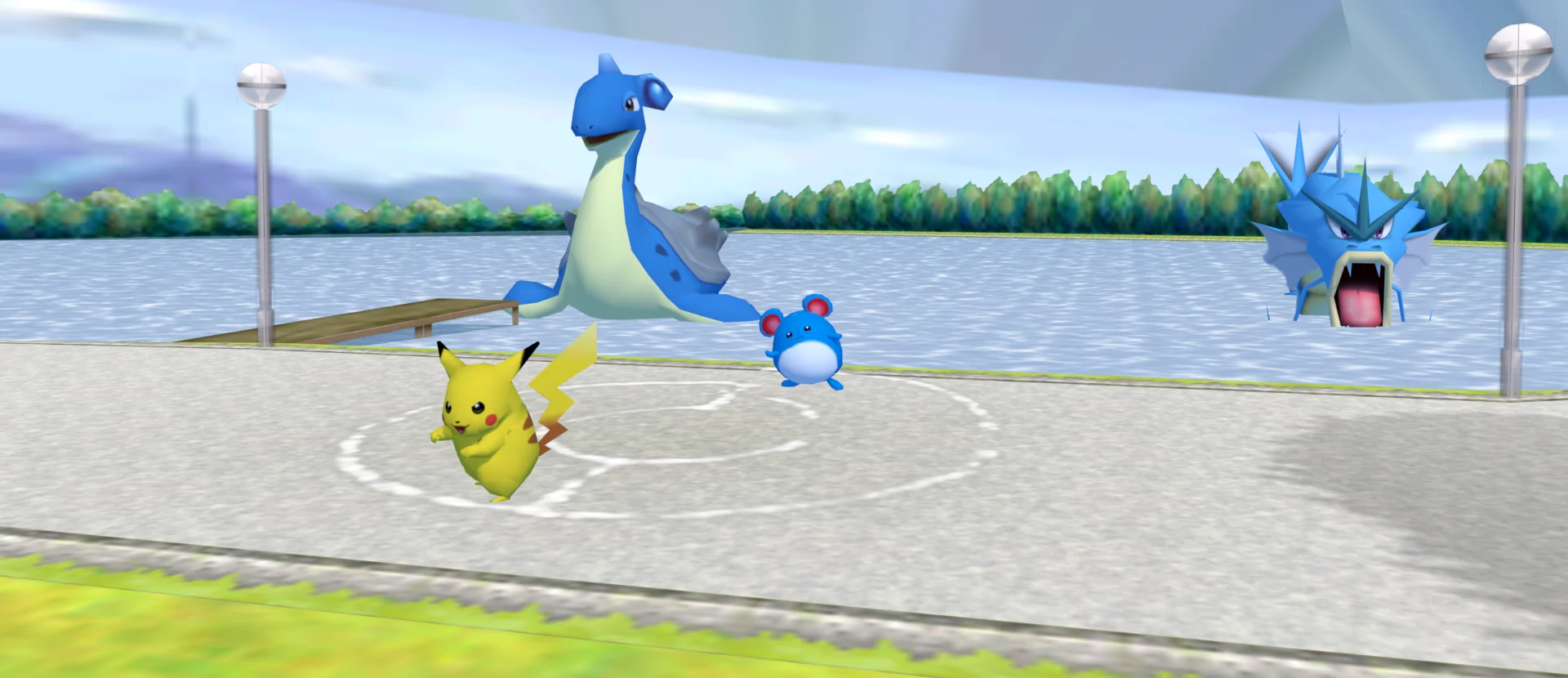
The extractor finds the asset archives by scanning the ROM for their headers, then unpacks each entry from Yay0, a Nintendo compression format. Every model is a FRAGMENT module, the same relocatable format the game uses for its code. A few MIPS instructions at the start of each one load the model’s address, so the extractor matches those instructions to find the data. From there it walks the model: the joint tree, the display lists (the N64’s own drawing commands), the textures, the skeletal clips, and the face clips that swap eyes and mouths frame by frame. Out come glTF files, PNGs and a catalog with readable names.
What the data doesn’t say
Some of it lives in the game’s code, not its data, so the code had to be read too.
- Effects. A move’s particle colours sit inside the effect engine’s programs. The extractor reads the instructions that emit particles to find them: the same smoke comes out white for Acid, orange for Fire Blast and blue for Surf.
- Minigame objects. Which objects each minigame uses came from reading its code’s calls to the game’s object loader. That also fixed several names, among them Golbat, Swinub, Pineco and the Egg.
- Arenas. Scrolling textures and animated colours are set by render callbacks in the code. The Blender add-on rebuilds them as live shader nodes.
- Shinies. A shiny is a hue, saturation and lightness shift per species, applied to every opaque texel. A few species, like the red Gyarados, have their own textures instead.
Fixes from the first day
- Scrambled images. Bank and face images are stored the way the N64’s texture memory holds them, with every odd row’s words swapped in pairs. Swapping them back fixed them.
- Washed-out colours. The cause was Blender’s defaults, not the extraction. The AgX view and the default specular took Pikachu’s yellow from 80% saturation in the ROM to 44% on screen. A Game colours import option sets the Standard view and turns the specular off, back to 80%.
He found it the ordinary way, testing each change as it landed, until “blender was getting really slow”.
One minigame, then online
Egg Emergency went first of the twelve, on Claude’s suggestion that it “could work better on mobile”. It was playable in the browser at 19:30. Rooms of four with invite codes came 39 minutes later. Asked whether multiplayer was the point from the start, João’s whole answer was “yes”.
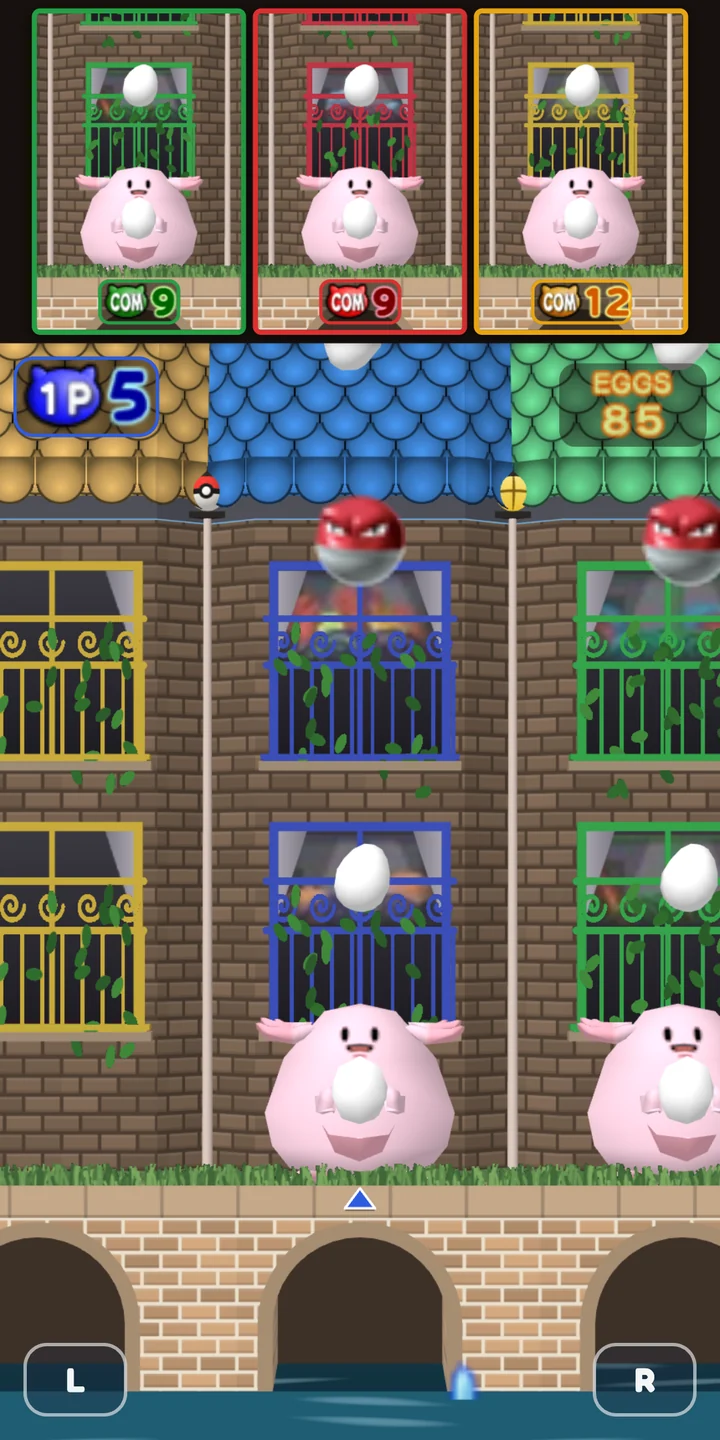
By 21:52 the server kept the score itself. Phones send only what their players do. The server deals the drops from one seed, replays every seat with a bit-exact Python copy of the remake’s rules, and corrects any claim that doesn’t match. Those rules were still the remake’s own: the drops followed a schedule it made up. The game’s real logic, read from its module, replaced them on 10 October. Tests check the Python and JavaScript copies against each other, and every minigame added since has the same pair.
A stage from a picture
In the game, Egg Emergency’s stage isn’t a model. It’s a pre-rendered picture, background 19, drawn for one fixed camera. The remake rebuilt it in 3D to that picture’s measurements: four brick bays 73.25 pixels apart, one per player, fish-scale roofs in the player colours, ivy on the balconies, lamp posts between the bays, and a bridge with an arch under each bay over moving water. The colours are sampled from the picture, the brick and tile textures are drawn when the game loads so they stay sharp at any size, and the Pokémon in the windows are the picture’s own paintings.
A flat picture only works from the game’s one camera. In 3D every screen gets its own, from the first build: a phone held upright follows your bay from the roof down to the water, and a wide screen frames all four players as the game does, showing more of the building the wider it gets.
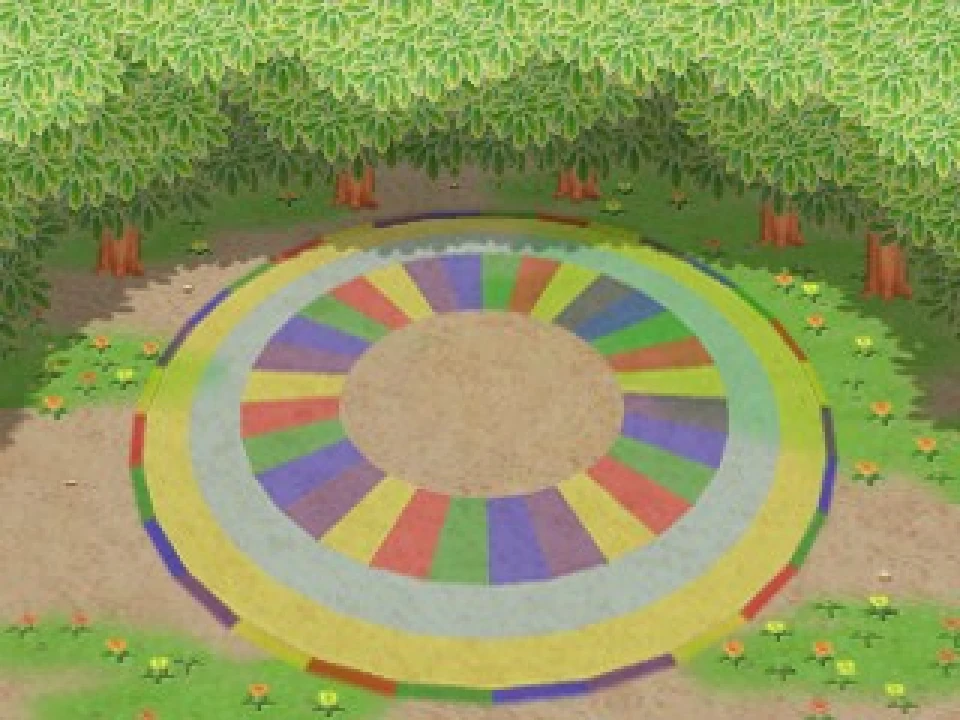
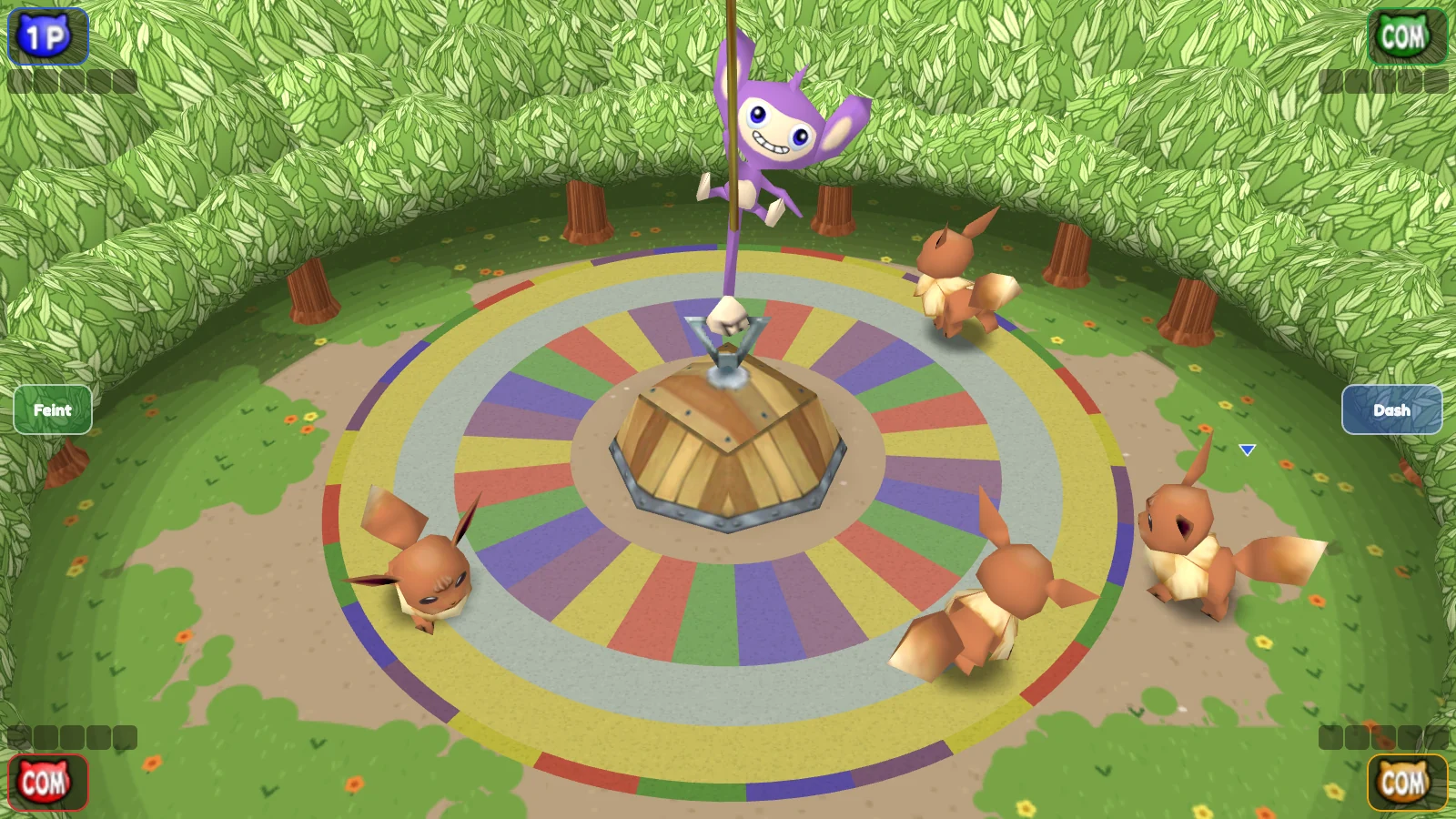
Eager Eevee got the same treatment on 1 October. Its field is background picture 44, the game camera’s view of a clearing. The ring’s bands and its 30 stripes were measured by putting the picture’s pixels back on the ground through that camera, and the five tree trunks at the back are the picture’s. The forest round the front of the clearing is made up: the game’s camera never sees it.
The sound
On the morning of the 28th the game got its music. Not recordings: there are none in the ROM.
Stadium 2 runs the audio engine from Ocarina of Time and Majora’s Mask. A song is a sequence, a MIDI-like script of a few KB. It starts up to 16 channels, and each channel plays up to four layers of notes. The notes play soundfont instruments made of short samples in VADPCM, Nintendo’s compressed format at about 4.5 bits a sample. On the console, the N64’s signal processor mixes the notes as they play.
The remake does the same, in two steps. Once, at build time, a Python tool finds the audio tables in the ROM and packs a minigame’s songs, its sound effects and only the samples they reach into one file. Egg Emergency’s came to 372 KB. In the browser, a port of the engine’s sequence player runs 180 updates a second, three per frame, as the console does. Each update steps the scripts, the envelopes and the vibrato, decodes the samples it needs, and hands the changes to Web Audio 0.15 seconds ahead.
Sound effects go through the same player, with the game’s own volumes, reverb and pan, so each player’s catch comes from their side of the screen. Egg Emergency’s song is sequence 84: 122 beats a minute, looping every 23.6 seconds.
Two things differ from the console. The reverb settings aren’t known yet, so the remake uses a plain feedback delay. And the file only downloads after the first tap with the sound on; simple tones stand in until it arrives.
Who did what
Every commit is co-authored with Claude, and the split is clean. Claude wrote the code. João ran the project: he set the goal, made it multiplayer from the start, tried every change as it landed, and called out what was off, from washed-out colours to Blender slowing down. The source code was Claude’s job; whether it worked was his.
At 18:23 on the 28th it went up on Cloud Run. Then three quiet days, and on 1 October two more minigames and a Telegram bot.